You do not need to speak Arabic to travel in Egypt well. But knowing 40 words changes everything — drivers smile, prices soften, waiters bring extra mint. This guide gives you the words that matter, with pronunciation written the way a native English speaker would read them, and the cultural nuances that make the difference between polite and slightly off.
Greetings — the foundation
- Salaam alaykum — "Peace be upon you." Universal greeting. Reply: "wa alaykum al-salaam."
- Ahlan wa sahlan — "Welcome." Also used as a friendly hello.
- Sabaah al-kheir — "Good morning." Reply: "sabaah al-nuur."
- Misa al-kheir — "Good evening." Reply: "misa al-nuur."
- Izzayak? (to a man) / Izzayik? (to a woman) — "How are you?" Reply: "alhamdulillah" (thank God).
The polite three
- Shukran — "Thank you." Reply: "afwan."
- Law samaht (to a man) / Law samahti (to a woman) — "Please."
- Afwan — "You're welcome" or "excuse me."
The haggling phrases
- Bikam? — "How much?"
- Ghali awi — "Too expensive."
- Fi ashra? — "Is there something cheaper?"
- Khalas — "Enough" / "Done" (used to close a deal).
- La shukran — "No thank you." Firm, polite, complete.
Practical phrases
- Min fadlak — "Please" (formal, male).
- Fayn al-hammam? — "Where is the bathroom?"
- Ana mish faahim — "I don't understand."
- Inta bititkallim ingilizi? — "Do you speak English?"
- Miya, law samaht — "Water, please."
- Bidoon talg — "Without ice."
- Halal? — "Halal?" (used to confirm at restaurants).
Warm-fuzzy phrases
- Ya salaam! — "Wow!" or "How beautiful!"
- Masha'allah — "God has willed it" (used for admiration, praise of children).
- Insha'allah — "God willing" (attached to future promises; not a refusal).
- Ya habibi / Ya habibti — "My dear" (male / female). Used affectionately, never suggestive.
- Khalas, khalas — "Enough, enough" (with a smile, ends a conversation gracefully).
Phrases to be careful with
Some Arabic phrases are used differently from their literal translation:
- Bukra — "Tomorrow." In practice means "eventually" — not a promise of tomorrow.
- Ma'alesh — "Never mind" / "It's fine." Can mean "there's nothing to be done" — used to accept a bad situation.
- Yalla — "Let's go" / "Come on." Often chanted to hurry things along.
How to practice before your trip
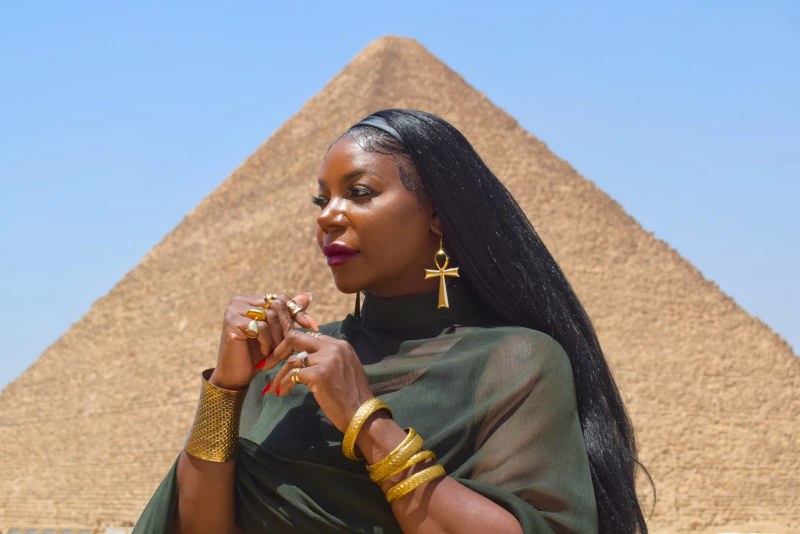
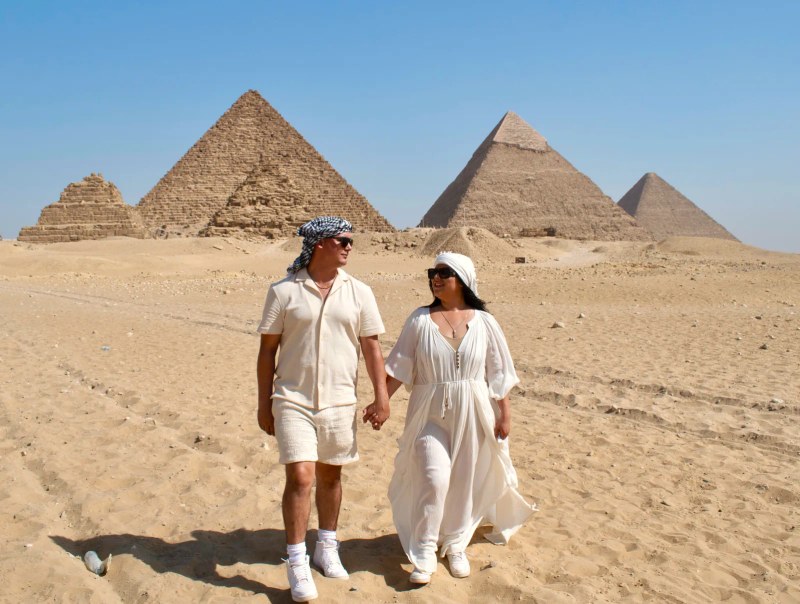
Ten minutes a day for two weeks is enough to make a real impression. Our licensed guides speak English fluently and will happily teach you more on tour — they love travellers who try. During a private Pyramids photoshoot or on our 7-day Egypt tour, ask your guide for the local pronunciation of any phrase — Egyptian colloquial is quite different from the Modern Standard Arabic you may find in apps. See all Egypt tours.