Egypt has a reputation for being difficult if you use a wheelchair, or if you travel with a parent who does. That reputation is half true — and the half that matters is not what the internet tells you. This guide is written by guides who spend every week of the year pushing wheelchairs across the Giza Plateau and stepping over the same stones you will step over. It is honest about what works and direct about what does not.
The honest answer first
There is no national accessibility law in Egypt. A handful of five-star hotels, the Egyptian Museum and select Nile cruise ships meet European or American standards. Almost everywhere else, accessibility is improvised — a portable ramp, a strong guide, a hand on the chair. That is not a reason to stay home. Thousands of travellers in wheelchairs visit Egypt every year and leave with photographs they will keep for life. It is a reason to book with people who have done it before.
The Pyramids and the Sphinx — where it actually works
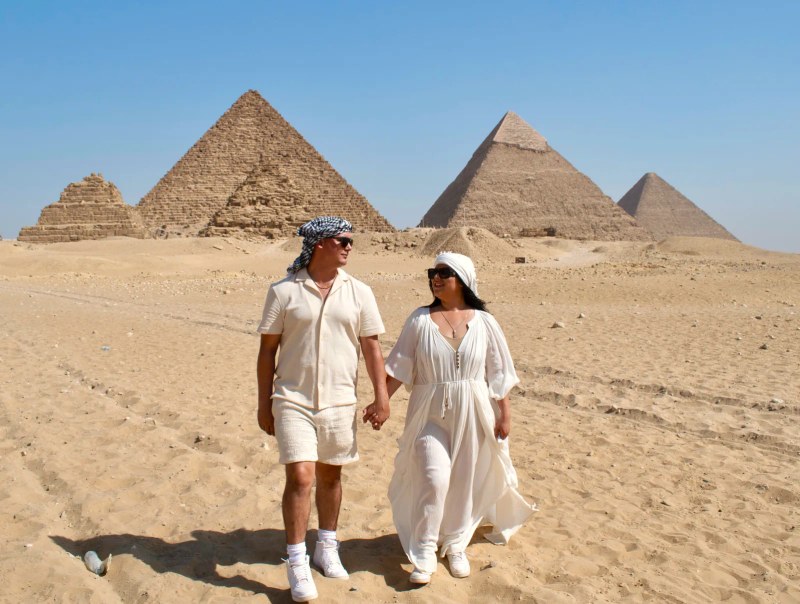
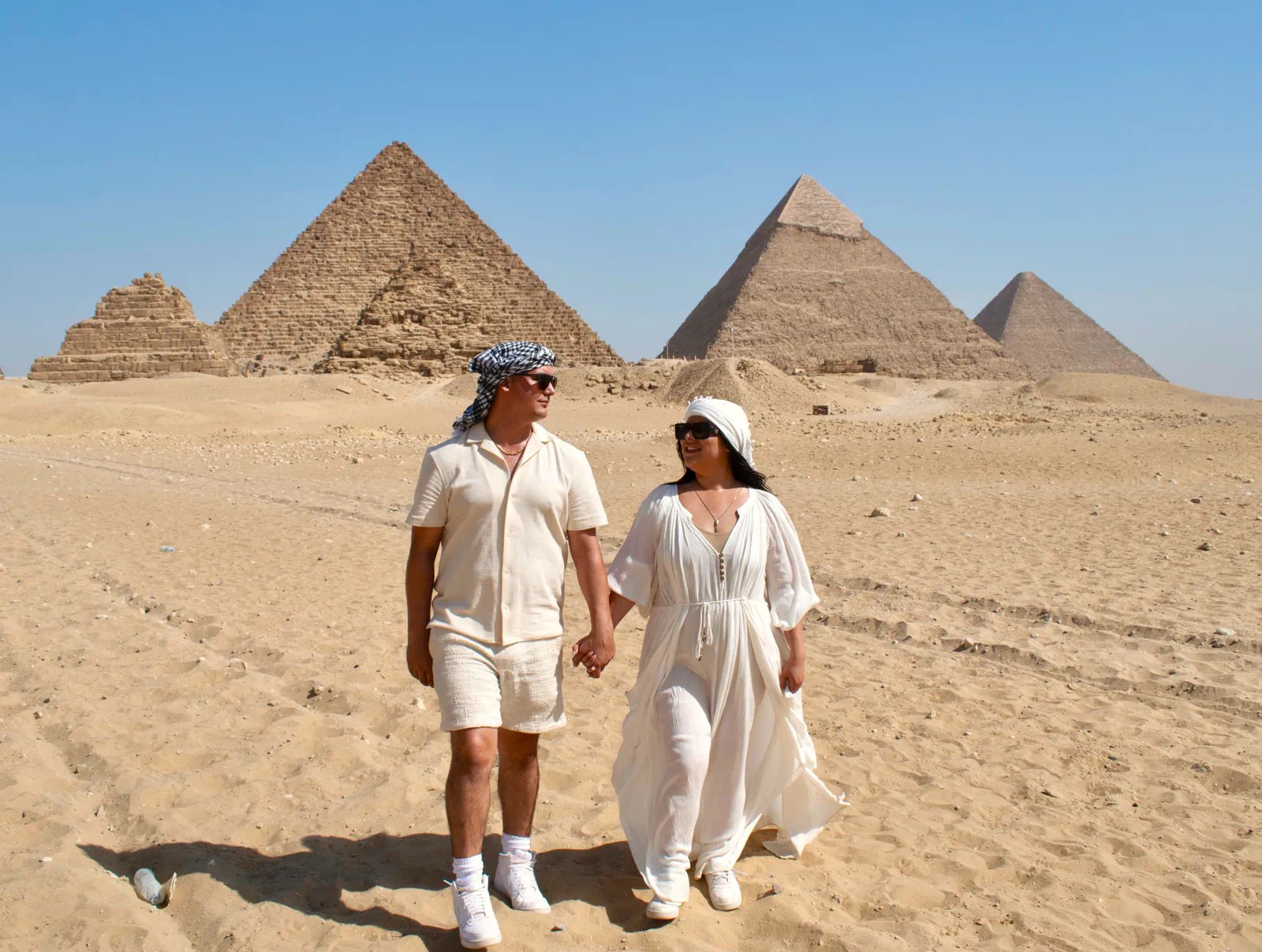
Giza is the most accessible major site in Egypt, and it is where most of our wheelchair-using guests spend most of their time. The paved plateau road links the Great Pyramid, the Panorama viewpoint and the Sphinx, and our drivers follow it to every photo stop. From the Panorama, the Sphinx viewing terrace is a gentle five-minute roll on smooth asphalt.
- Great Pyramid base: accessible up to the foot of the pyramid and the outer door. The interior chambers are not.
- Sphinx viewing terrace: fully paved, with a long ramp to the upper viewpoint.
- Panorama: reached by car — the classic postcard angle.
- Solar Boat Museum: lift at the main entrance.
Luxor, Aswan and the Nile — realistic expectations
Luxor is where expectations need recalibrating. Karnak and Luxor Temple both have long, paved approaches that a manual wheelchair handles easily with a pusher. The Hypostyle Hall is flat; the side chapels have sunken floors. The Valley of the Kings is genuinely hard — the visitor centre and one model tomb are accessible, but the real tombs need stairs. Our recommendation: fly to Luxor for two nights, do Karnak, Luxor Temple and the Luxor Museum properly, and take a Nile cruise from Luxor to Aswan rather than a road transfer. Modern cruise ships have lifts and accessible cabins.
How to prepare — transport, guide, equipment
- Transport: insist on a private van with a folding ramp, not a sedan. It is standard on our family tours.
- Guide: a guide who understands the difference between “accessible” and “possible with help”. Ours have pushed wheelchairs across Giza hundreds of times.
- Equipment: bring a lightweight folding chair and a spare cushion. Cairo's older pavements are uneven.
- Medication: pack double. City pharmacies are excellent; the West Bank of Luxor is sparse.
- Timing: October to April. May to September is genuinely dangerous for anyone with limited mobility.
Our accessible tour options
Every itinerary can be adapted for a wheelchair user in the group. The two most-booked options are the Egypt family tour — private ramp van, slower pace, mixed-ability groups — and the private Pyramids tour, which is entirely vehicle-based and works beautifully for a first visit or a photoshoot with limited walking. For couples who want the same accessible experience with a romantic edge, our honeymoon tour includes a private sunset shoot at Giza on paved ground and a Nile cabin selected for accessibility. And for the full luxury version — accessible five-star Nile cabins, helicopter transfer, private dahabiya — see our luxury Egypt tours. For a longer accessible journey combining Cairo, Luxor and a Nile cruise, our 7-day Egypt discovery tour can be arranged with accessible cabins and a private vehicle at every stop. Browse all options at all Egypt tours.