Every visitor to Giza stands in front of the Sphinx and hears the same question: what is it, and what happened to its nose? The real story is stranger than the myths. This guide covers the six theories Egyptologists actually debate — the confirmed facts, the plausible hypotheses, and the fringe claims that have shaped how the world thinks about this 73-metre colossus.
What we actually know
The Great Sphinx of Giza is a limestone statue of a recumbent lion with a human head, carved from the bedrock of the plateau. Most Egyptologists date it to the reign of Pharaoh Khafre (c. 2558–2532 BCE), the builder of the second pyramid — based mainly on its position along the causeway from Khafre's Valley Temple. It is 73.5 metres long, 20 metres high, and was carved from a single limestone outcrop that still sits beneath it.
The six main theories
1. The Khafre attribution (mainstream)
The Sphinx was built as a portrait of Khafre with the traditional nemes headdress and false beard of a pharaoh. The evidence: proximity to his pyramid and causeway, and the famous Dream Stele of Thutmose IV found between its paws. No inscription definitively names the builder — a gap that fuels every alternative theory.
2. The Khufu hypothesis
A minority argue the Sphinx was carved by Khufu — builder of the Great Pyramid — and merely restored by his son Khafre. The argument rests on the Inventory Stele, which describes Khufu repairing the Sphinx's tail. Most scholars reject this as later fabrication.
3. The Orion correlation
The idea that the Giza pyramids mirror the three stars of Orion's Belt, and that the Sphinx aligns to Orion itself. Popularised in the 1990s. The astronomy is real; the correlation is not considered evidence by mainstream Egyptology.
4. The water erosion hypothesis
Geologist Robert Schoch proposed that the Sphinx's enclosure walls show erosion patterns consistent with prolonged heavy rainfall — placing the original carving thousands of years earlier than Khafre. Others argue the pattern is from wind-blown sand and ancient quarrying.
5. The face theory
Some argue the face is not Khafre's but that of a different ruler or a composite royal portrait. The face is proportionally small relative to the body — a sign of re-proportioning, likely in antiquity.
6. The missing-nose conspiracy
The Sphinx lost its nose before the 15th century. Documented evidence points to the Sufi cleric Sa'im al-Dahr, who reportedly attacked the face in 1378 CE. Well-recorded — but the mouth and eyes have also been damaged, suggesting multiple events over centuries.
See it yourself
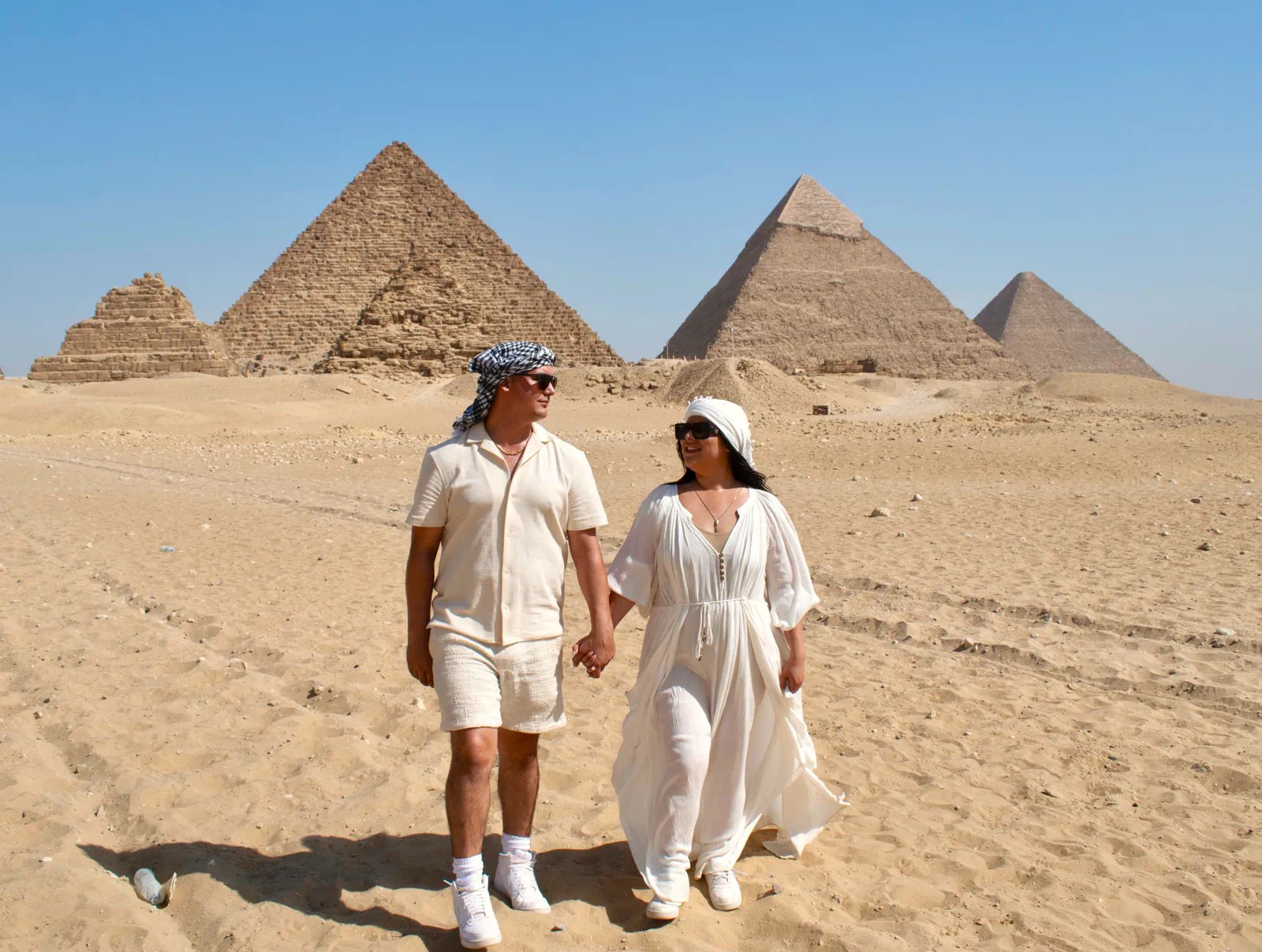
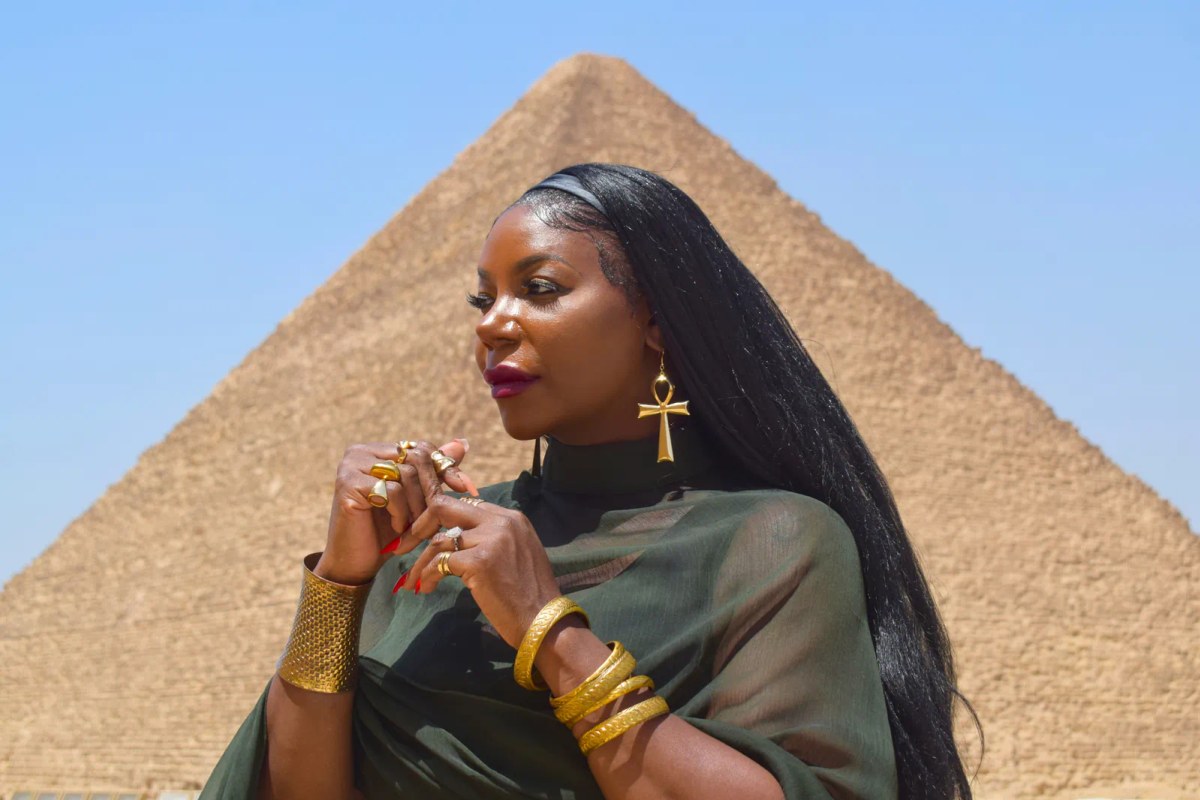
The Sphinx is at its most photogenic at sunrise, from the terrace above its enclosure. Our private Pyramids photoshoot includes the Sphinx terrace at golden hour, and our 7-day Egypt tour covers it with full Egyptological commentary. For a deeper history-and-photography mix, see our Cairo & Giza 2-day tour.